
New Report on Search & Rescue Tactics in Single‑Story Homes
UL Research Institutes’ Fire Safety Research Institute has released a new technical report as part of the Study of Fire Service Residential Home Size‑up and Search & Rescue Operations project. The report builds on findings from the previous reports and adds three new tactical considerations based on additional analysis of full‑scale residential fire experiments designed to answer critical questions about how the fire service should coordinate search, suppression, and ventilation.
How the Experiments Were Designed and Conducted to Improve Search and Rescue Tactics
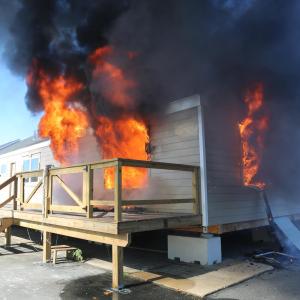
ULRI’s fire safety researchers conducted 10 experiments in purpose‑built, fully furnished, single‑story, single‑family structures representative of today’s residential environment. The homes included four bedrooms, two bathrooms, and an open kitchen/living area, with an HVAC system to study the movement of smoke and heat.
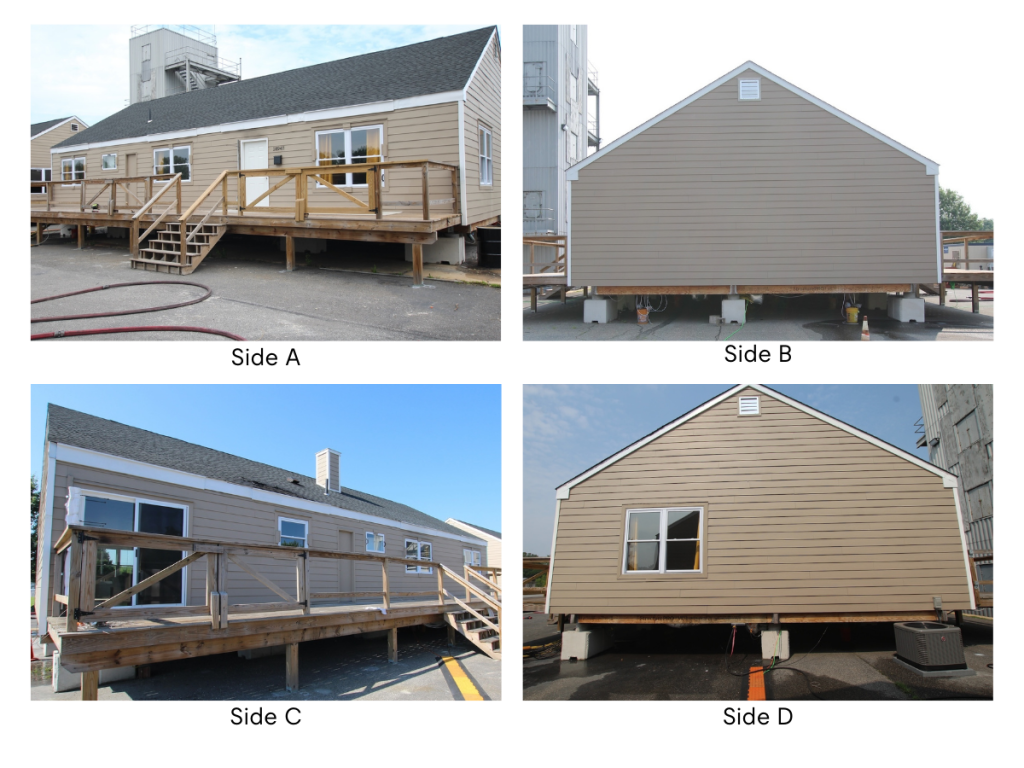
The structure was instrumented for each burn to measure gas temperatures, gas concentrations, heat fluxes, pressures, and gas velocities across all rooms at multiple heights. To understand how tactics interact under realistic conditions, researchers used the same structure, fuel loading, and instrumentation across burns while intentionally varying key tactical actions, such as the timing and location of search suppression and ventilation actions.
Three New Search and Rescue Tactical Considerations Emerged From the Latest Experiments
The additional experiments culminated in three new tactical considerations, which complement the original nine TCs and online course, to help firefighters, company officers, and incident commanders make evidence‑based decisions.
- TC 10: Provided sufficient resources, upon arrival of a fully developed fire with extension to the exterior, consider conducting simultaneous execution of exterior and interior suppression operations. The data shows that a well‑applied exterior stream provides rapid improvement on the interior, and coordinating with interior suppression maximizes victim survivability and firefighter safety.
- TC 11: Consideration should be given to locally ventilate compartments remote from the fire area as soon as possible. Pre-suppression, this would include isolation of the compartment prior to ventilation. Remote spaces teach us that distance from the fire does not equal safety. These rooms are often where victims are found, and where conditions can continue deteriorating even when the fire is controlled if left unattended.
- TC 12: Immediately post-suppression, consider conducting hydraulic ventilation to increase the rate at which combustion gases exhaust from the structure. While doing so, consider the importance of ventilation within the structure (opening all other doors and windows) and if resources allow, dedicate multiple hoselines to perform hydraulic ventilation in different affected areas of the structure.
How the New Findings Support Crews Using Search and Rescue Tactics and What’s Next
These TCs translate the research into clear, actionable steps that help firefighters understand the impact of specific evidence-based tactics, support company officers in coordinating actions on the fireground, and give incident commanders clearer evidence to shape their structural firefighting strategies. The fire service research report is designed for all ranks — from firefighters stretching the first line to chiefs shaping strategy and standard operating procedures.
The report also sets the stage for the updated Search and Rescue Tactics in Single-Story, Single-Family Residential Structures course launching later this spring.
“Seconds count on the fireground. Our goal was to simulate the residential fire environment under controlled conditions, measure the impact from firefighting tactics to victim survivability, and give the fire service simple, trustworthy guidance they can use on their next call.”
—Keith Stakes
Principal Research Engineer
UL Research Institutes | Fire Safety Research Institute
To learn more, download the technical report to explore the full analysis and all three new TCs.